Projects
Things I'm Building
I collaborate widely with colleagues in publishing studies, digital humanities, and media studies. If you are interested in working together on a project or grant application, please get in touch.
I am particularly interested in partnerships that bring together academic researchers and industry practitioners: publishers, platforms, technology companies, and writer organisations.
Dudley Editions

Your Voice, Our Stories, Creating Connection
Dudley Editions brings fresh life to treasured stories by creating personalised versions in your own voices. By harnessing the transformative power of technology to create bespoke audio versions of stories, we can bridge the gaps of time, distance, and generation, ensuring the stories and voices of loved ones continue to resonate and inspire.
It can be as simple as making your voice available to your children at bedtime when the daily commute makes you late for the goodnight story. Or connecting a favourite relative who's working overseas and wants nothing more than to share their favourite childhood story with the next generation?
Dudley Editions is there to make that happen.
Our commitment extends beyond just technology; we strive for ethical, socially responsible innovations that reconnect humanity in an increasingly digital world. It's not just about creating audiobooks; it's about preserving something personal and deeply important to the user. This is the emotional core of Dudley Editions.
We're a small technology company - just a few friends committed to taking innovative ideas and making them a reality. We're meeting interesting people along the way, growing our community, thereby ensuring what we do meets your needs.
Join us as we bridge the gaps of time, distance, and generation. Together we can connect regardless of physical distance and work together to strengthen relationships.
Visit the websiteJADE Check

JADE started as a spreadsheet of publishing industry job descriptions that I was curious about how gendered the language in them was, and how that linked to the salaries being offered, and the demographics of who worked in publishing. It grew to include ableist language, ageist language, and a variety of exclusionary words and terms that can be flagged and changed.
A study by Salwender and Stahlberg (2024), for instance, find hints that women want qualification fit for a role more than men, but that they do need to feel prepared to apply. This, they find, creates a "higher psychological hurdle being present for women compared to men as women have to overcome their higher desire for preparedness to make the decision on whether to apply for a job".
There is a power dynamic that exists between employers/applicants and writers/gatekeepers, and the dynamic is mediated by the what the platforms we use (from social to job boards to AI sifters) allows.
Based on the job database I had created and the findings that quite a lot of publishing jobs were gendered feminine (and that those that paid more were gendered masculine), I wanted to create a tool that people could use to check their own job descriptions for inclusive language. And, JADE has since expanded to check any text for exclusionary language.
Visit the websiteThe Agent Stack
I'm learning to build and run AI agents to automate and interrogate publishing industry questions, things that would otherwise take hours of manual work or simply aren't possible at scale without code.
The agents I'm working on so far span a few different architectures: multi-agent swarm simulations run against research corpora to surface industry patterns and predictions; ReAct-based tool-use agents for content generation and scheduling; and monitoring agents that track how language evolves in professional contexts and feed findings back into live tools.
Each one has taught me something different about where agents are useful, where they fail, and what the publishing industry might actually do with them. I'm interested in what happens when you give agents meaningful tasks to see how they work, before (and if you even should) scale things.
One example from the stack: DE Agent, which drafts a week of Instagram content for Dudley Editions.
Smidget
Smidget takes a manuscript and turns it into a clean, accurate summary at whatever length you need, 300 words for a quick pitch, 1,500 for a detailed synopsis. Built specifically for publishing rights professionals, it also translates summaries in one click and exports as PDF or Word, ready to send to contacts in Milan or Barcelona without extra steps.
It was built to fill a gap that rights agents know well: writing a good summary takes time and effort, and when you're handling a volume of submissions that time adds up. Smidget handles the processing and then deletes the manuscript. What stays on your dashboard is the summary. No manuscript storage, no text used to train any LLM.
Access is by request. It's designed for agency teams rather than individuals, everyone works from the same account, sees the same submissions, and can download or translate any summary without duplicating effort.
Earlier Projects
Echoes of the City
2016 – 2023
By geo-locating the stories in unique places throughout the city centre, the project engages listeners by taking them on a journey of stories and poetry, exploring sides of the city they might not have found through conventional means.
The use of the Podwalk app is supplemented by a website which features information about the project, biographies of the authors, written copies and audio files of the stories, and a map of where users can find and listen to them.
The project was inspired by the way social media companies use new technology to encourage people to engage with content in new ways. I thought, why not use technology to allow people to experience literature in a unique and immersive way.
Using Podwalk, which is a geolocational podcasting app that guides you around the location using a map interface and playing the stories as you get within the vicinity of where they are tagged, we pinned each story to a specific location.
After developing this idea into a more formal proposal, I took it to The Bridge Awards, a small philanthropic organisation in Scotland that microfunds the arts. They were on board immediately and with the support of Edinburgh UNESCO City of Literature, I set up a website, organised calls for writing, set up social media (and a manager), and put the whole thing into motion in early 2016.
We received 79 entries from around the world. People from Canada, America, Cambodia, and around the UK wrote stories and poems set in and around Edinburgh. The long list was narrowed down, and the judges panel decided the final fifteen stories.
The judges panel consisted of myself, Blythe Robertson (our social media manager), Eleanor Pender (Edinburgh City of Literature), Tracey Emerson (The Bridge Awards), Asif Khan (Scottish Poetry Library), and Roland Gulliver (Edinburgh International Book Festival).
We worked with the top fifteen authors to edit their stories and poems for flow, as these are mainly going to be heard and not read, and hired two exceptional voice actors. Natalie Barrett worked for 10 years in theatre and radio throughout the UK, and is currently recording the voices for the second series of the award-winning cartoon 'Gigglebug', and has enjoyed working on various radio and TV advert campaigns including Dobbies, Bupa, M&Co and 32 Red. James Mackenzie was a perfect accompaniment to Natalie. He has worked extensively on stage for many theatre companies including The National Theatre of Scotland, and has performed all over the country in everything from Macbeth to Sunshine On Leith the musical.
We had designers Chris Red and Jessica Dale create the logos, and the Saltire Society allowed us to record in their offices in Edinburgh. After our sound technician edited and sent the sound files back, they were up to be tested on the app Podwalk within days.
The project was officially launched on May 16th, with a social stroll down from the Castle. We strolled and listened to the stories nearby and had a drinks reception to follow, where we celebrated the achievements of the authors. Overall, the project was a huge success!
The website was archived in 2023.
Lunchquest
July 2011 – 2022
Established in July 2011, Lunchquest aimed to give readers an insight in to Edinburgh's vibrant lunch and dining scene.
Populated by the fantastic reviews (mostly) by Blythe, we posted something new almost every day of the year. With well over 2,500 posts under our belts, we published our fourth annual Guide to Edinburgh in August 2015.
There wasn't a place that serves food that didn't review. We covered as broad a range of places as we could, from the Michelin star finery of places like Castle Terrace to the humble burger van, and everything in between.
We tried to eat out (or get takeaway) from as many different places as the bank manager would allow, took pictures of what we've been served, and offered a few words to describe things.
We rated on four categories: Food – what does it taste like; Presentation – what does it look like; Setting – what does the place that serves the food look like; and Service – how do the people serving the food serve it. We used this method to reflect our overall experience, as considerations beyond what food is on offer often need to be made when choosing a dining venue.
Some places might serve knockout food, but are a little down-at-heel, so are perhaps not where you might wish to go for an intimate interlude. Equally, some very swish places serve very mediocre grub, so you might prefer to go there for a light snack, just drinks, or with people you don't like.
I think this work reached its peak when we were listed as must follow foodies on a Buzzfeed list. That's winning right there.
We closed the site in 2022 after many years of great food and friends.
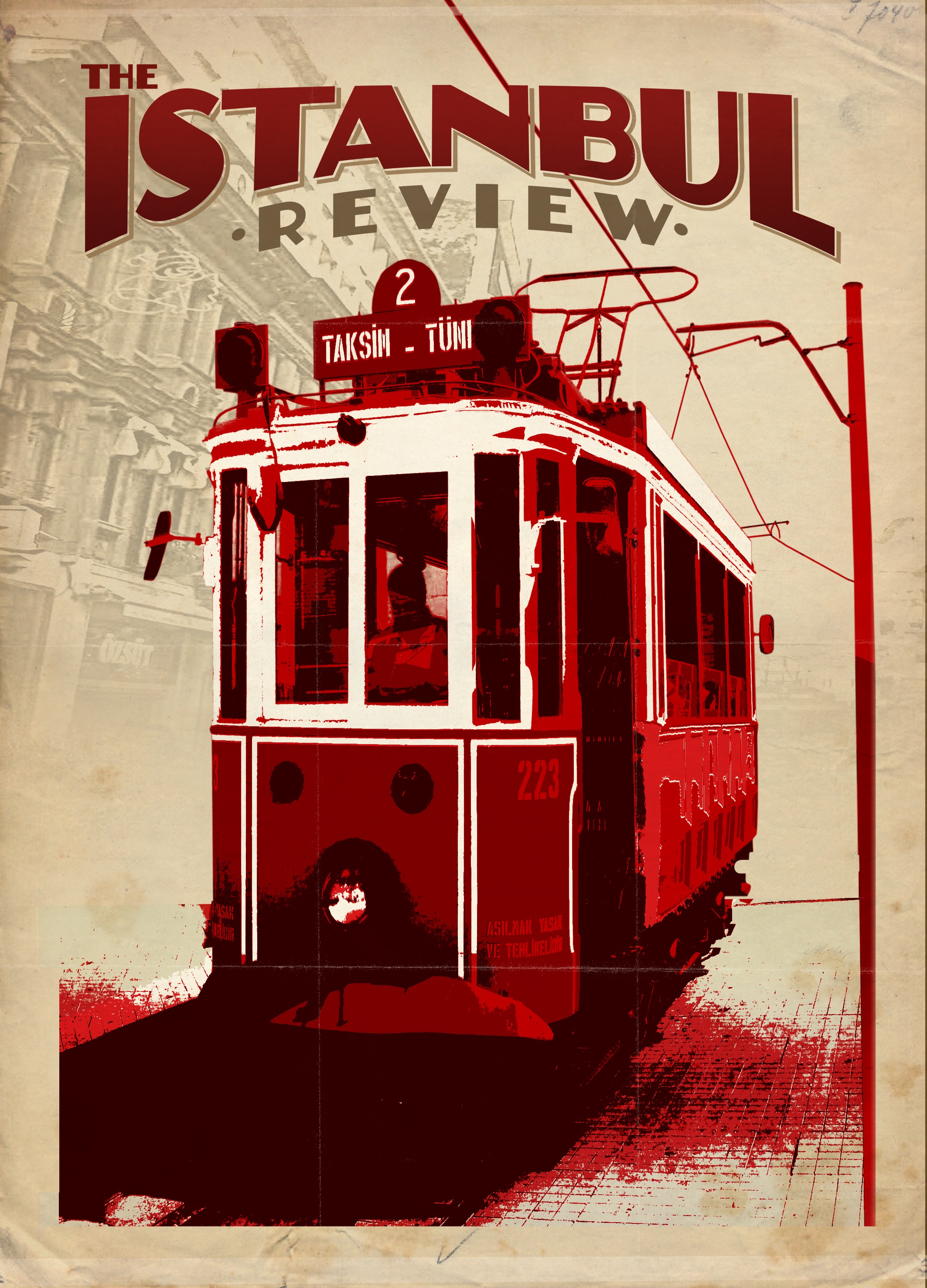
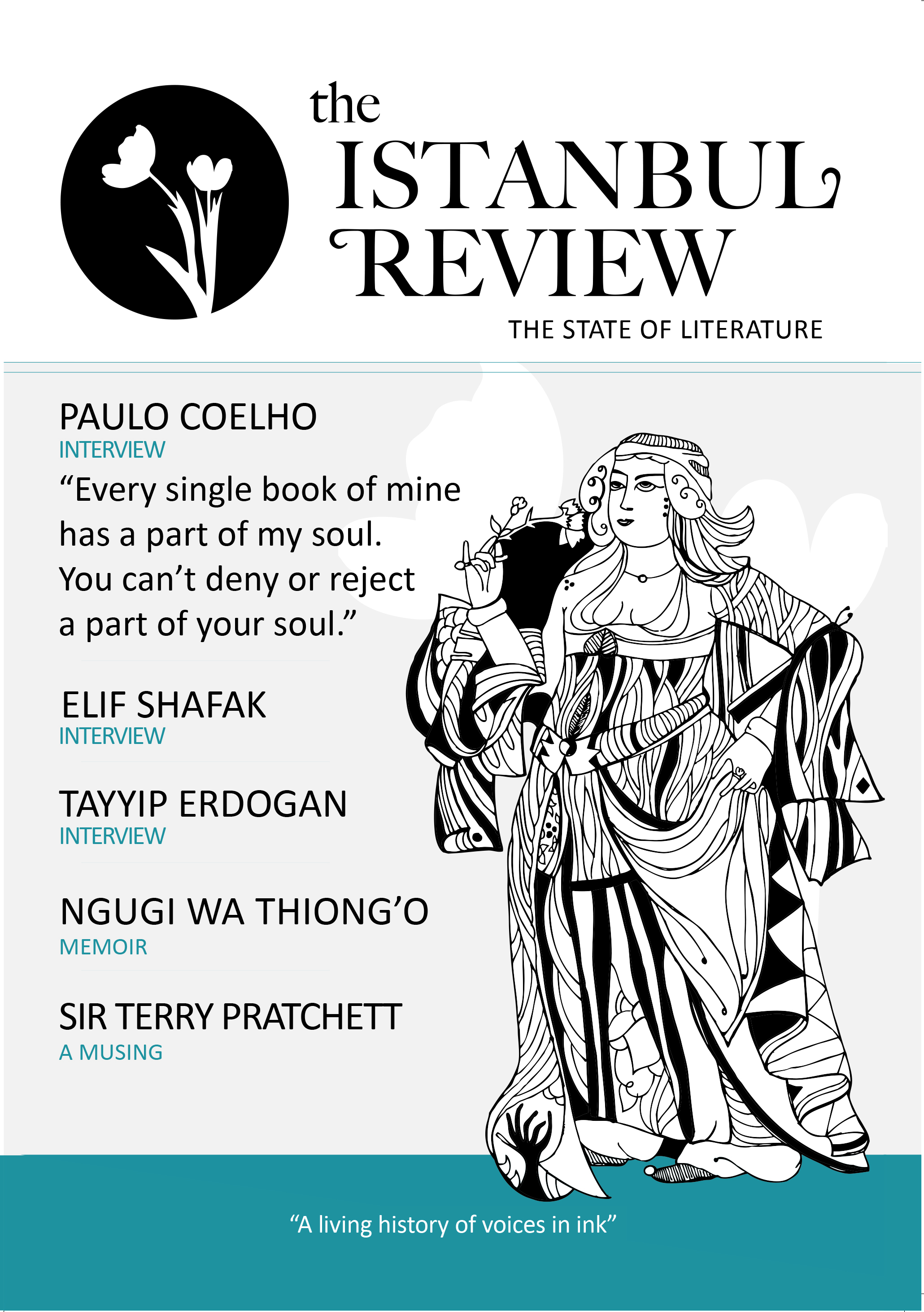
The Istanbul Review
The Istanbul Review creates a platform for dialogue between authors, new and established, and readers. It gives writers an opportunity to talk about their craft, showcase new work and discuss the philosophical implications of literature and its place in modern society, while creating a living history of 21st century literature.
The Istanbul Review was founded in January 2011 while Hande Zapsu Watt and I were PhD students in creative writing. We discovered that Istanbul, for such a massive and growing city and literary landscape, did not have a printed literary journal.
The Istanbul Review began with a simple wish: to bring together writers, critics and those influential people from other walks of life whose lives have been changed by literature and who in turn change the world. The journal exists to bridge gaps, to cross borders and to be a platform for world literature.
We published big name voices next to newcomers. Including interviews with and original works from:
- Recep Tayyip Erdoğan
- Elif Shafak
- Ruth Gilligan
- Paulo Coehlo
- Sir Terry Pratchett
- Shaun Tan
- Kyung-Sook Shin
- Sara Sheridan
- Kirsty Logan
- Patrick Watt
- Julia Donaldson
- Claire Askew
- Ludmilla Petrushevskaya
- Banana Yoshimoto
- Gerhard Schröder
- Ngugi wa Thiong'o
- Shan Jiang
- Lin Anderson
- Gavin Francis
- Emrah Yucel
- Tracey Emerson
- Kate Mosse
- Phili Reeve & Sarah McIntyre
- Simon Sebag Montefiore
There were five issues of the review before we closed shop.